

Windows 10/11, Linux + Android
The station boots your program’s software of record. The x86 build you already qualify installs on the station — no port, no second toolchain, no vendor shell in front of it.
BeastTX — ground control station
Sunlight-readable, IP55-sealed, 9 h on one battery charge — a full mission computer and the radios of your program in one CNC-machined aluminium housing, assembled and tested in Bremerhaven.
NDAA-compliant. Made in Germany. Built for contested environments.
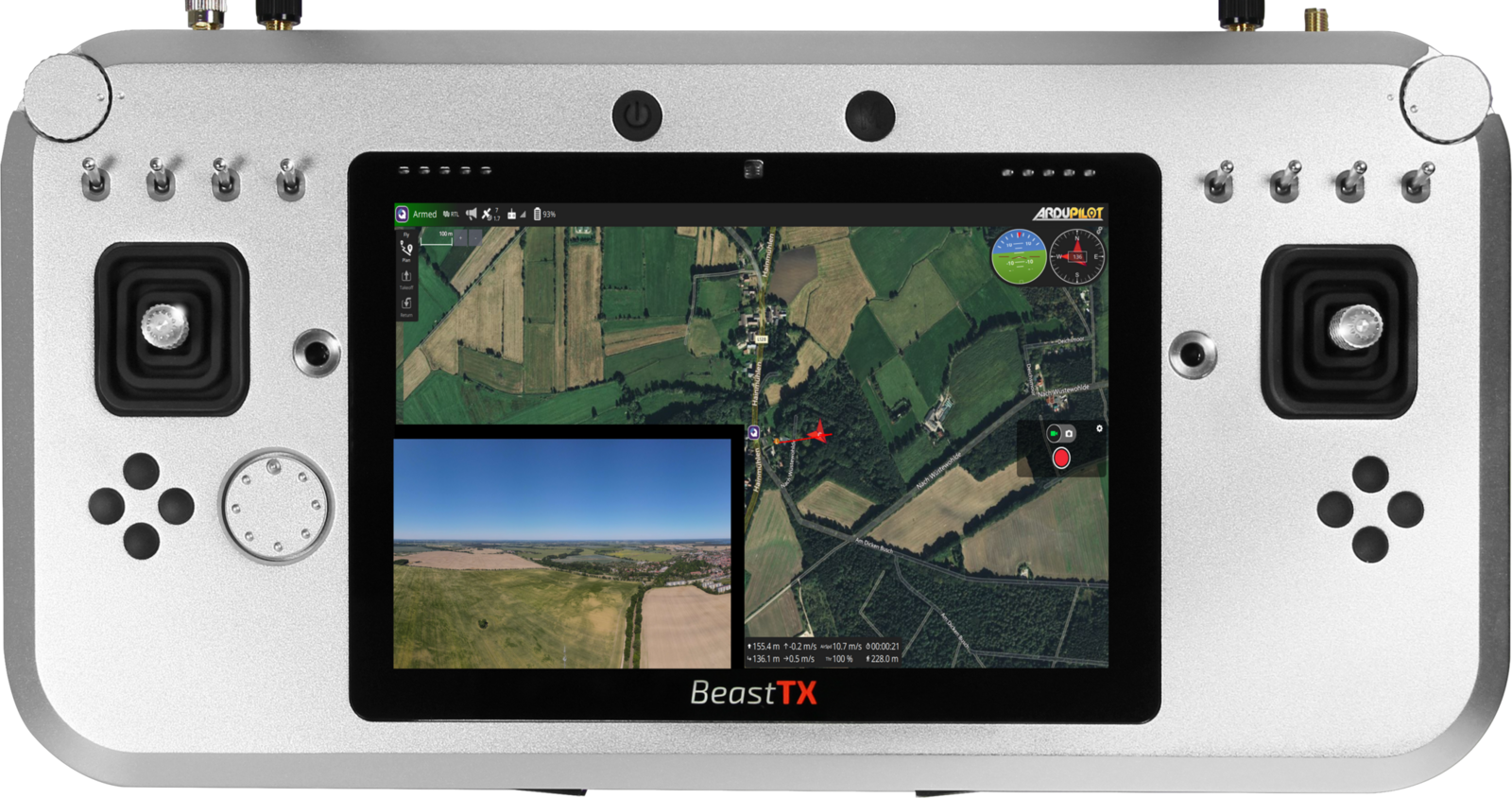
Mission map and video on one 1275 cd/m² display — series hardware, no render
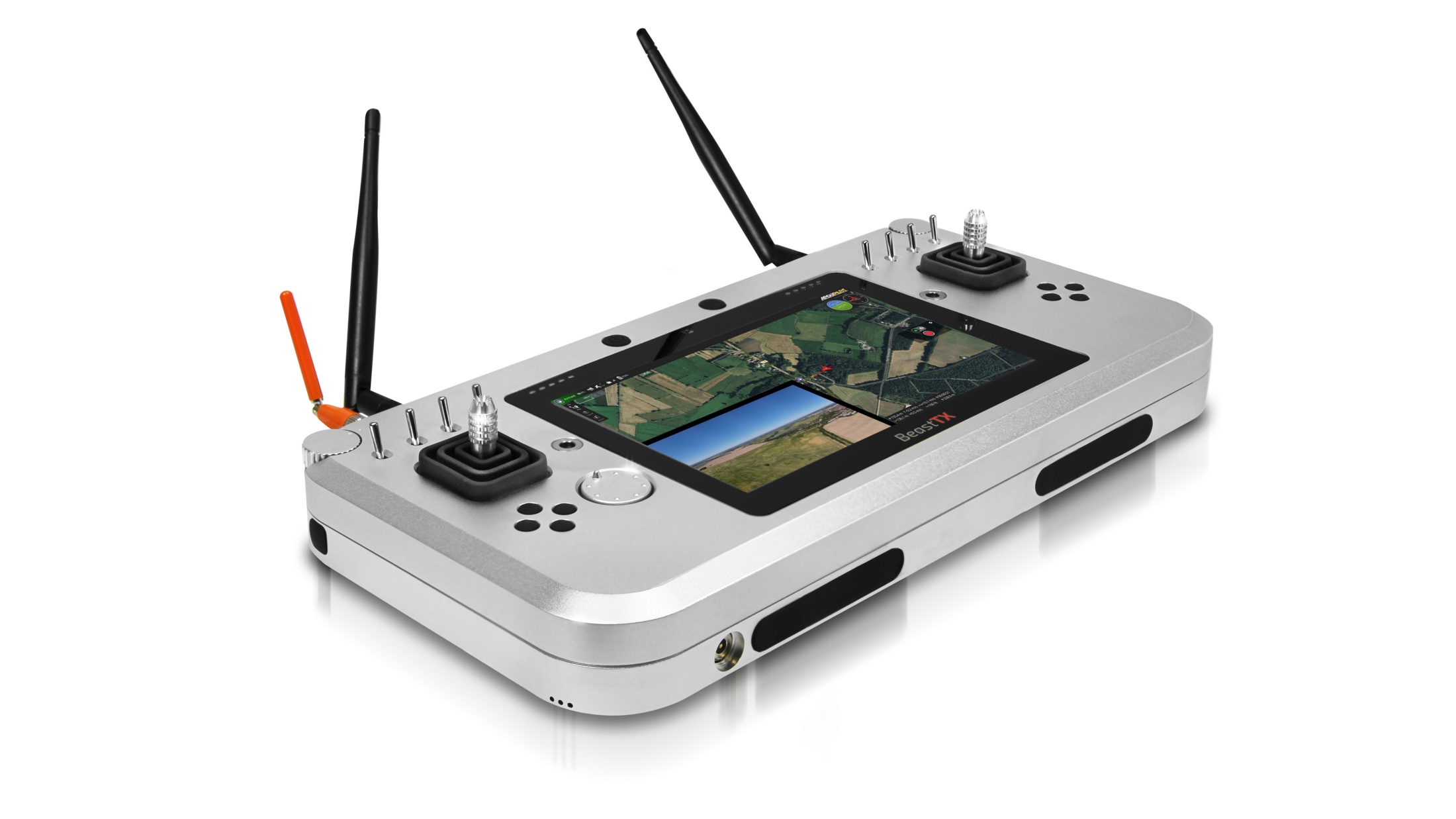
Made in Germany
Built for the field
Ruggedized means numbers here, not adjectives: brightness that holds in direct sun, sealing against driven rain and dust, a heated display for winter starts — and a full shift of runtime on one charge.
Housing
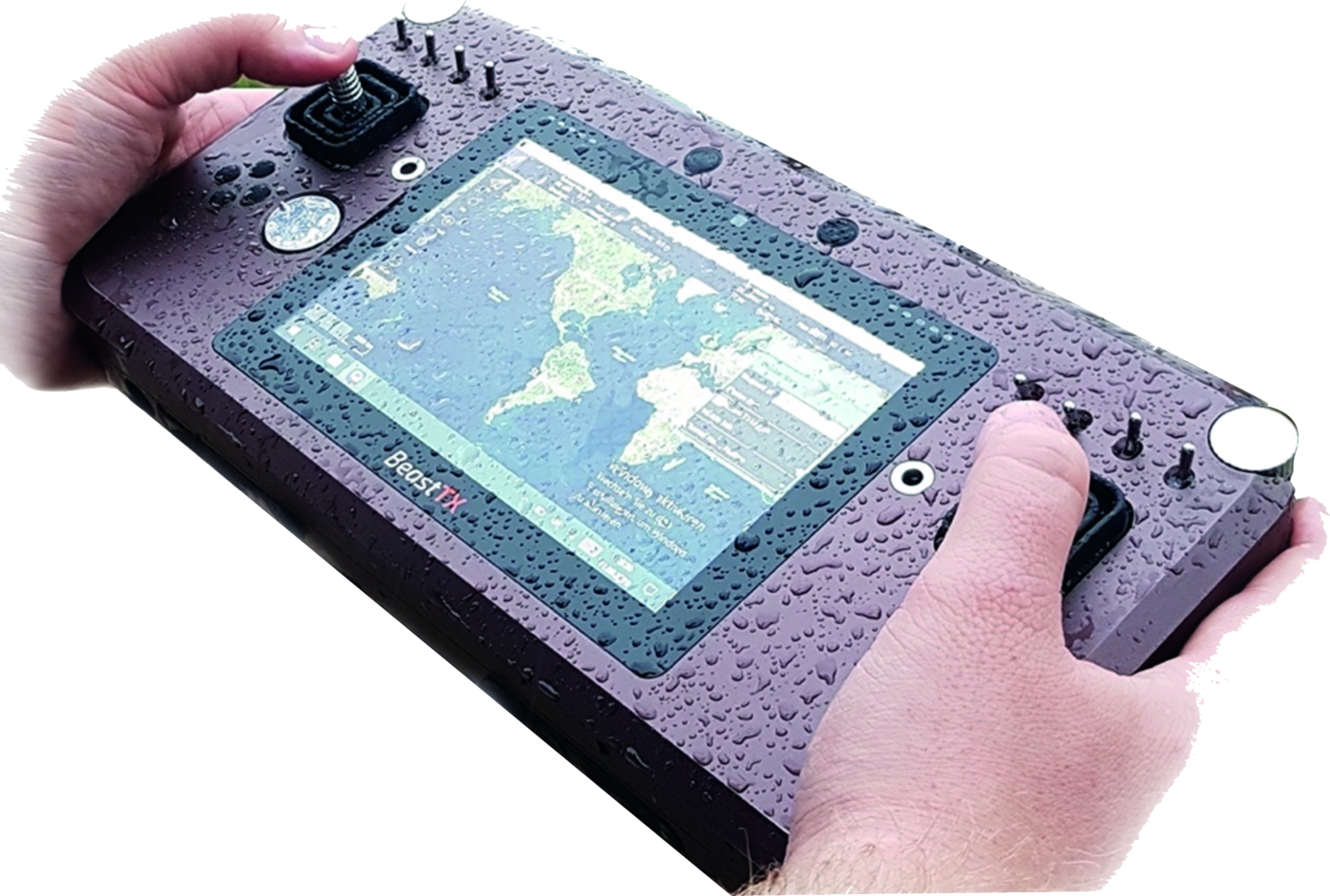
The housing is machined from aviation aluminium and finished in Cerakote and anodized colorways — the same coating in every colorway. Assembly, configuration and final test happen in Bremerhaven, and every batch leaves with its own quality record under ISO 9001.
Compute
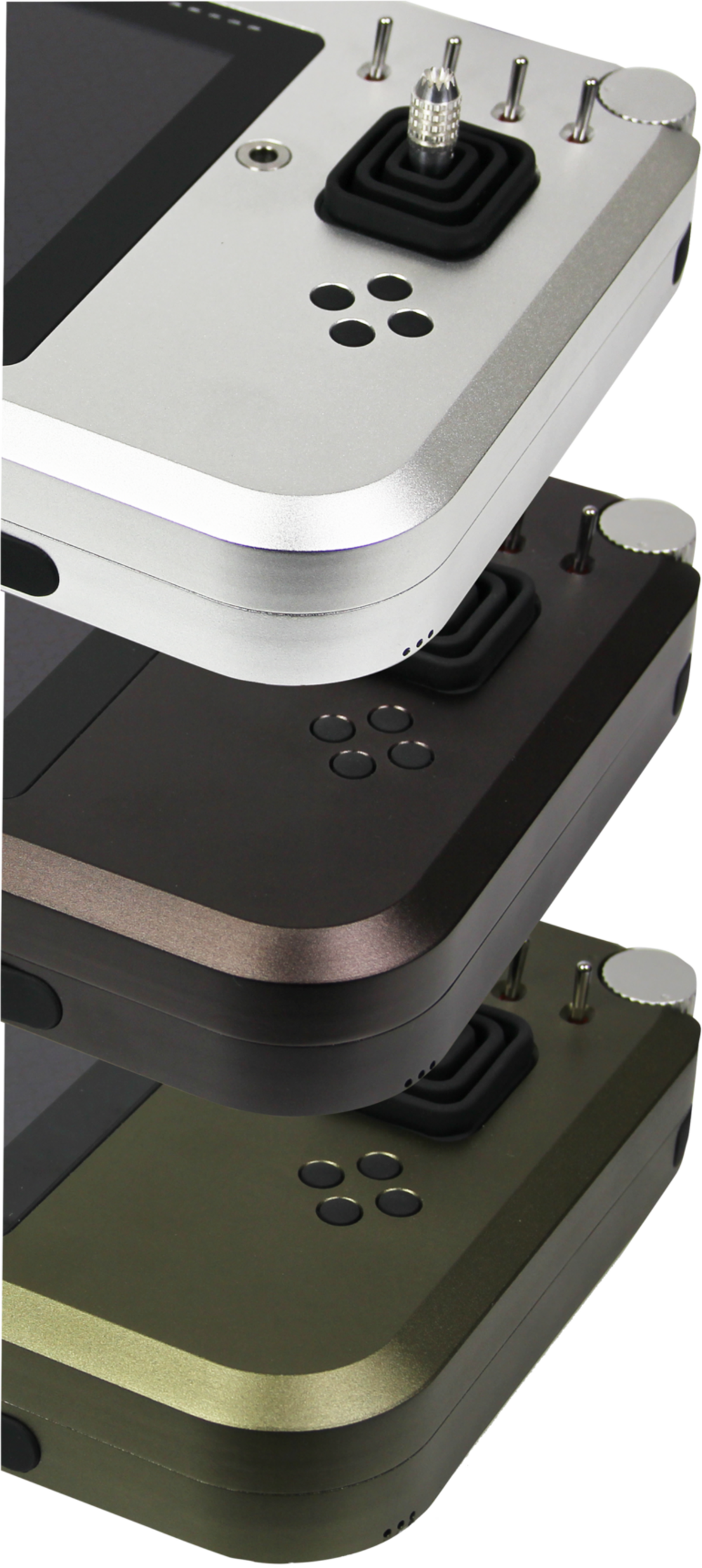
BeastTX runs the full BeastOS operating layer — mission control, mapping and RF planning — on its own computer, fully offline. It boots the operating system your program runs, not a locked appliance shell.
The station boots your program’s software of record. The x86 build you already qualify installs on the station — no port, no second toolchain, no vendor shell in front of it.
Offline maps, mission data and recordings stay on the station — no cloud, no license server, nothing that has to reach the internet to let an operator fly.
Embedded-grade x86 inside the sealed housing: mission UI, offline mapping and hardware-decoded video run on the station itself, not on a laptop tethered to it.
One signed firmware chain from station to link — one vendor signs it, one vendor answers for it, and AES-256 runs on FIPS 140-3 level 1 compliant modules.
Integration
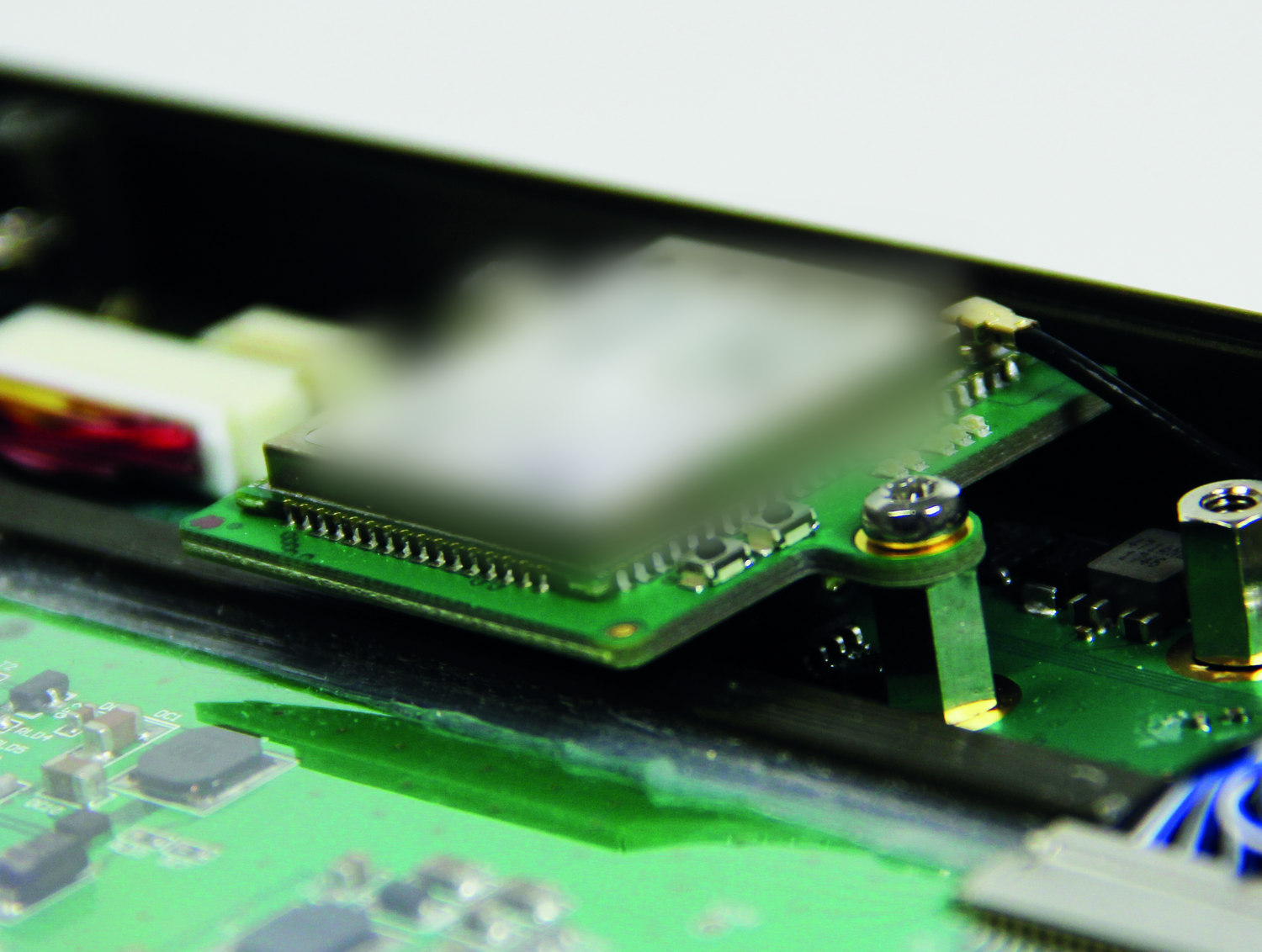
BeastTX is radio-agnostic by design. Four internal module slots take swappable radio modules on an open module standard — our own BeastLink modules and third-party radios alike. When your program’s radio of record changes, the station stays.
Radio compatibility
Not a wish list: our own plugin modules, and the third-party radios we have built integration kits for. Every row uses the same four module slots and the same four buses.
| Module | Origin | On the link | Integration status |
|---|---|---|---|
| BeastLink HD | BeastUAS | Video and data on one link — 100 km tested range, 2–10 ms control latency alongside | Plugin module |
| BeastMLRS | BeastUAS | Long-range RC and telemetry | Plugin module |
| BeastSDR | BeastUAS | Video, data and control on one unit, proprietary OFDM waveform | Plugin module |
| Doodle Labs | Third party | Program’s radio of record | Integration kit |
| Microhard | Third party | Program’s radio of record | Integration kit |
| DTC | Third party | Established MANET radio | Integration kit |
| Silvus Technologies | Third party | Established MANET radio | Integration kit |
| Taisync | Third party | Established MANET radio | Integration kit |
| Your radio of record | Third party | Third-party datalink options up to 200 km | Same module slots, same four buses |
Every row seats in the same four module slots over UART, USB, Ethernet and CAN. The radios themselves — BeastLink HD, BeastMLRS, BeastSDR and the open module standard — have their own page.
Operations
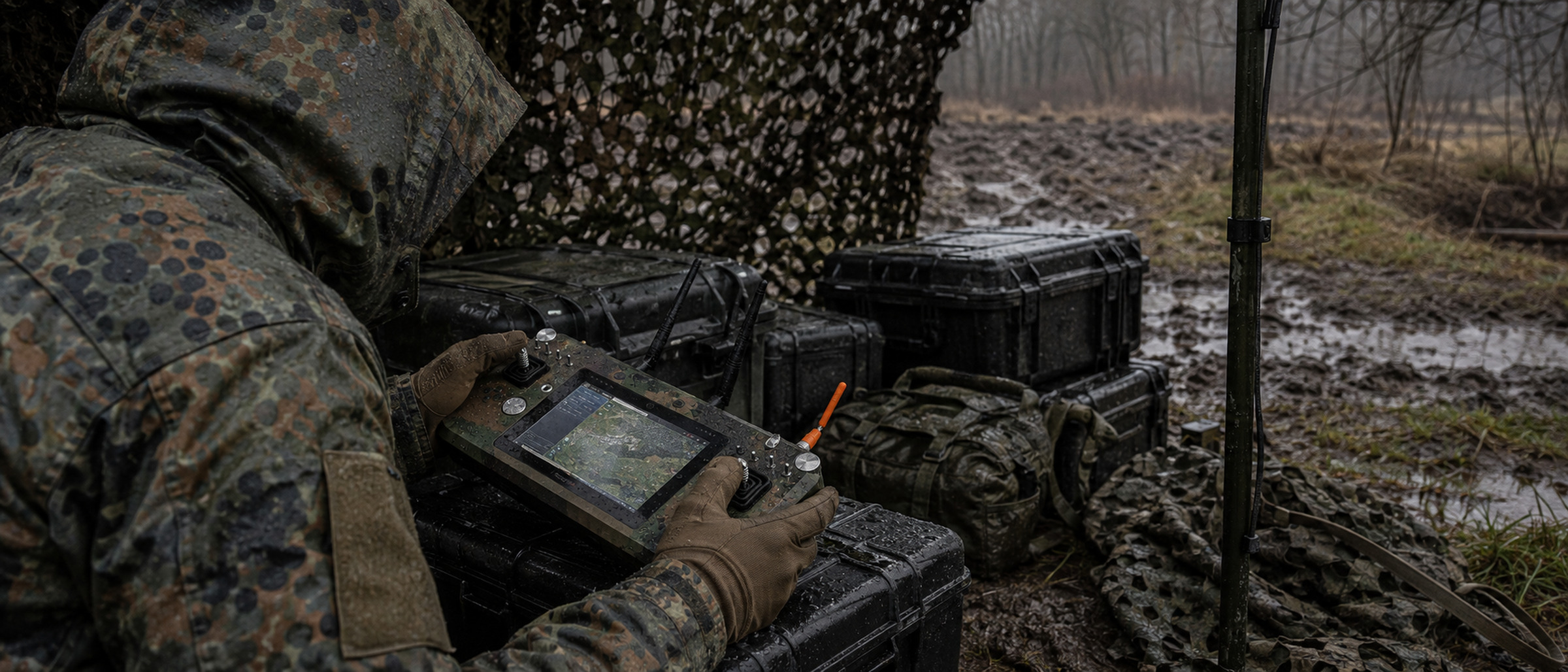
BeastTX stations are deployed in real operations today — proven under real combat conditions, as the catalog states it. Three ways armed forces put the station on the ground:
One operator carries station, link and control: 9 h on one battery charge, IP55-sealed, readable at 1275 cd/m² in direct sun.
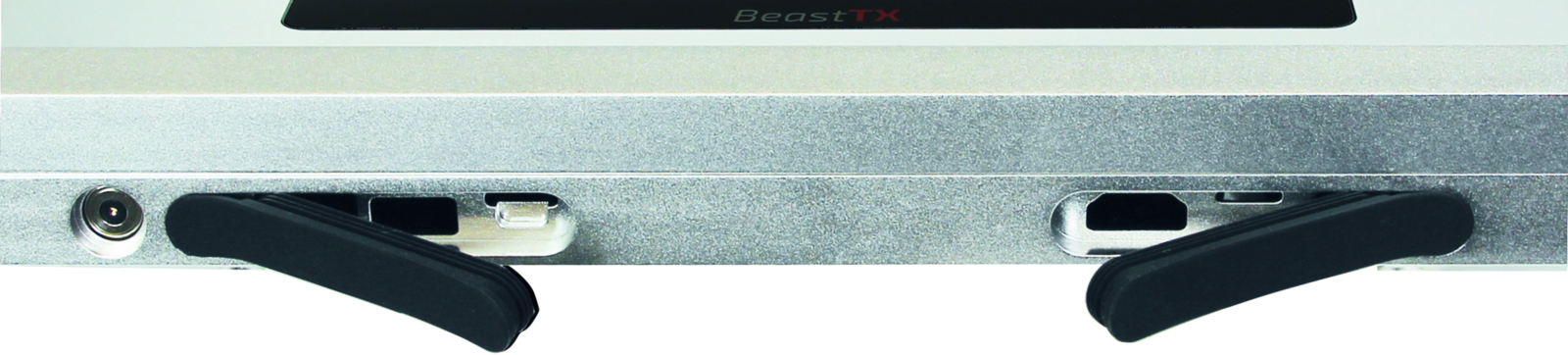
The same station mounts in a vehicle: CNC aluminium housing, sealed I/O behind captive covers, display heater rated to −20 °C.
Tripod- or console-mounted for site and perimeter control: the four module slots take the program’s radio of record, and BeastOS runs fully offline.
Specifications
Link range and latency are properties of the radio, not the station — the 100 km tested range and 2–10 ms control latency are BeastLink figures.
Next step
Choose colorway, radios and options in the configurator — or talk to engineering about your program’s radio of record.